Category: Media and Culture
-

Print Culture and the Formation of the Anarchist Movement in Spain, 1890-1915
…or, how I learned to stop worrying and love the book… James Michael Yeoman This is the first of a two-part discussion which explores the creation and contents of my book, Print Culture and the Formation of the Anarchist Movement in Spain, which was published last autumn. While the second part of the discussion will…
-

Lucy Jane Santos’ ‘Half Lives: The Unlikely History of Radium’
Lucy Jane Santos In the late 19th century that Wilhelm Röntgen discovered a previously unknown form of powerful radiation that was invisible to the human eye. This type of ray, which no one (including Röntgen) fully understood at the time, was so mysterious that he simply named it ‘X’. In 1896, working from Röntgen’s findings,…
-
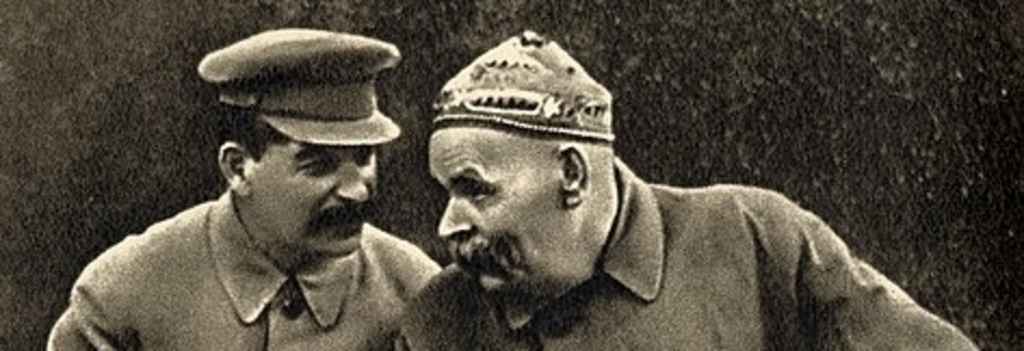
The jokes always saved us: humour in the time of Stalin
Jonathan Waterlow This piece was originally published at Aeon under a creative commons licence, and has been reproduced here with the agreement and encouragement of the author. Stalinism. The word conjures dozens of associations, and ‘funny’ isn’t usually one of them. The ‘S-word’ is now synonymous with brutal and all-encompassing state control that left no…
-

Gender, Nation and Decolonisation in Indian Cinema, 1947-1975
Lucy Inskip Cinema can help us to trace the process of decolonisation after 1947 in India. The direction of Indian cinema changed not only with independence but also in the decades that followed, while India’s post-independence modernity project wavered, especially during the cynicism and extra-parliamentary challenge of the 1970s. Whilst political commentary by cultural producers…
-

Realising Socialism Abroad? What Communist History Has To Offer In International History Education
Ilana Hartikainen Even in an age of increasing globalization and close connections between different countries and regions, most history in schools is still taught from a national perspective. American students, for example, learn of the American Revolutionary War with a clear set of good guys and bad guys, never giving a thought to the soldiers…
-

Using Scrapbooks as Historical Sources
Cherish Watton. Think of any topic, and someone, somewhere, has probably made a scrapbook on it. People scrapbooked on things which were important to them; family, friendships, professional activity, popular culture, political, and associational activity. Scrapbooks didn’t just document family life. Politicians and diplomats turned to scrapbooks to record their careers and were often acknowledged…
-

Mo Moulton’s ‘Mutual Admiration Society’: How Dorothy L. Sayers and her Oxford circle remade the world for women
Mo Moulton. In 1912, Dorothy L. Sayers and five friends founded a writing group at Somerville College, Oxford; they dubbed themselves the ‘Mutual Admiration Society.’ Barred, initially, from receiving their degrees despite taking classes and passing exams, the women battled for a truly democratic culture that acknowledged their equal humanity, pushing boundaries in reproductive rights,…
 History blog archive