Category: Essays
-

Interview with Adam Simmons on ‘Nubia, Ethiopia, and the Crusading World, 1095-1402 (Routledge, 2022’)
By Gabby Storey and Adam D. Simmons How did you get into the topic of the book? I developed my initial interest in earlier African history during my MA at KCL. I’ve always been more interested in the topics which are often not covered, to understand why not and to see how much history we…
-

Finding Transgender Worlds in Late Medieval Iceland
By Basil Arnould Price Translations are the author’s own. On May 25, 2022, software engineer Helen Staniland streamed an interview with journalist Helen Joyce. During the interview, Joyce remarked: “…we have to try to limit the harm and that means reducing or keeping down the number of people who transition. That’s for two reasons –…
-

The Zainichi: between two countries, two names, and two languages
By Bomi Choi The New York Times bestseller Pachinko (2017), written by Korean American author Min Jin Lee, and the screen adaptation of the English-language novel on Apple TV+ in 2022, tell stories of Japan’s ethnic Koreans. The Japanese term Zainichi literally means ‘resident in Japan’, but it is commonly used to address its Korean…
-
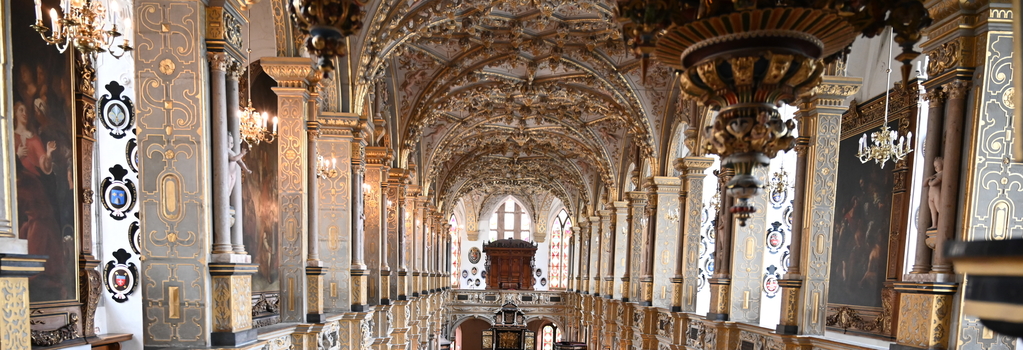
The court chapel’s position in Early Modern Europe: a methodological approach
By Manos Vakondios The “court chapel across religious boundaries” is my PhD project, part of the wider MSCA project PALAMUSTO (Palace Museum of Tomorrow)[1]. Together with nine other PhD theses, palatial spaces, concepts, and infrastructures are addressed and explored by colleagues in universities and museum institutions across Europe.[2] The research focus of my doctoral project…
-

Desire between Men in the Byzantine Imperial Court: Some Evidence from Symeon the Logothete, Letter-Writer and Historiographer
By Mark Masterson All translations are the author’s own. The Byzantine Empire’s glorious Macedonian dynasty, beginning in 867 and ending in 1056 saw the empire experience both territorial expansion and an efflorescence in learning. The culture of men in the upper reaches of this society was a milieu that featured homoeroticism and same-sex desire. As…
-
An ‘alt-ac’ career within the academy: working on Oxford’s National Trust Partnership
By Hanna Smyth Since finishing my PhD in Global & Imperial History in 2019, I’ve spent most of the last three years working on the Heritage Partnerships Team at the University of Oxford, specifically as the Support Officer for its National Trust Partnership. This was a career path I’d never known existed before the PhD,…
-
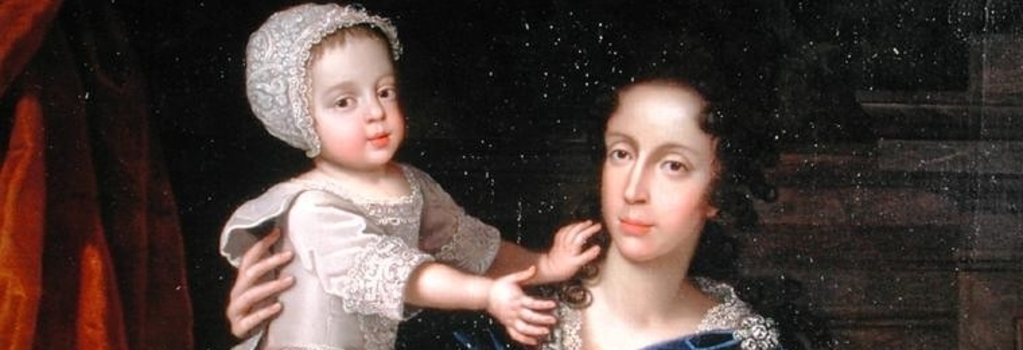
The Cat in the Cradle: Conspiracy Theories and Credible News, 1688 – and Now
By Laura Doak On 10 June 1688 a new Prince of Wales was born at St. James’s Palace, London, and whispers swept across Europe. Some claimed that the baby, born to King James VII & II and his queen, Mary of Modena, was a fake. Stories circulated that it was a plot to engineer counter-Reformation…
-
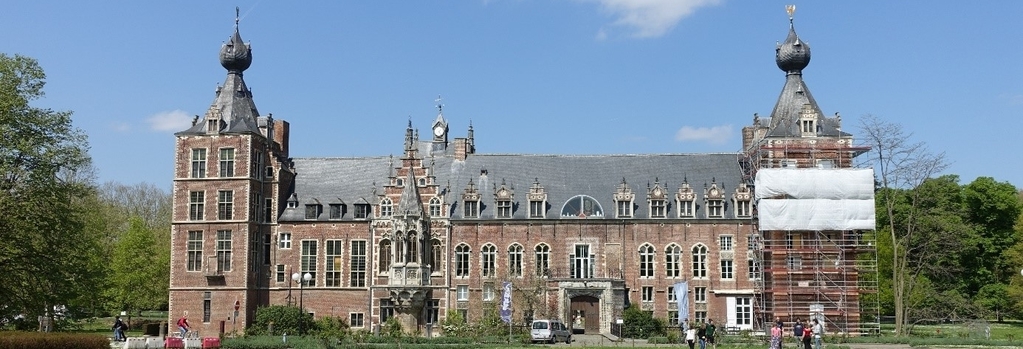
Researching (from) a Ducal Residence: the Tower Apartment of Mary of Hamal at the Castle of Heverlee
By Miara Fraikin In March 2020 – not the best timing to be honest – I started my PhD research within the Horizon 2020 funded European Training Network PALAMUSTO (Palace Museum of Tomorrow). Uniting ten researchers from nine hosting institutions in five European countries, this research project aims to investigate the court residence or palace…
-
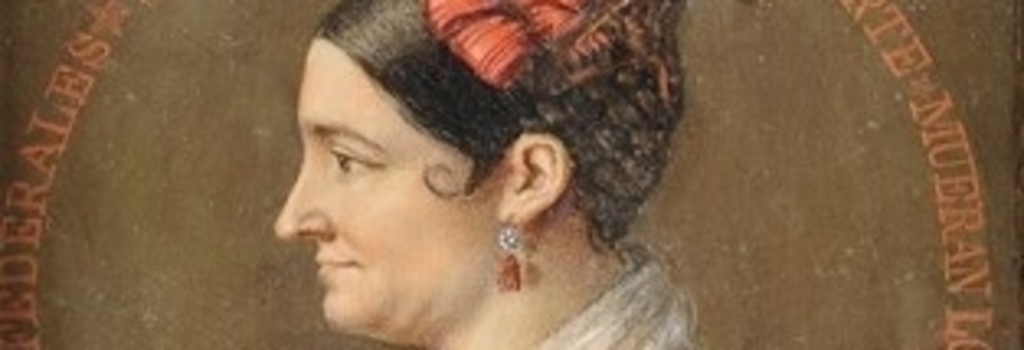
Portraits of Female Power in Argentina: Encarnación Ezcurra and Eva Perón
By Rachel Morgan The last three decades of the twentieth century have witnessed a boom in writings on Latin American women to the left of the political spectrum. When considering the topic of leftist Argentine women in power, the image of Eva Perón is inescapable: she was the impoverished and illegitimate child from Los Toldos…
-

Replacing Ireland’s Lost Records: Doing Public History with the Beyond 2022 Project
By Elizabeth Biggs One hundred years ago, in the spring and early summer of 1922, the Public Record Office of Ireland in the Four Courts complex in Dublin was occupied by anti-Treaty forces, with Rory O’Connor as one of their leaders. They were opposed to the Anglo-Irish Treaty of the previous year, which they felt…
 History blog archive