History Journal blog archive
The online offering of the official journal of the Historical Association
This website constitutes the archive of the History journal blog up to May 2023. For further information, please consult the new blog as well as the journal website.
-

Using Scrapbooks as Historical Sources
Cherish Watton. Think of any topic, and someone, somewhere, has probably made a scrapbook on it. People scrapbooked on things which were important to them; family, friendships, professional activity, popular culture, political, and associational activity. Scrapbooks didn’t just document family life. Politicians and diplomats turned to scrapbooks to record their careers and were often acknowledged…
-

Historiography in Action: Teaching and Learning Historiographical Approaches through Active Primary Source Analysis
Liz Goodwin. This semester, my students discussed their memories of the London 2012 Olympic Games. For the majority of them, this took place when they were around 11/12 years old, in the summer between primary and secondary school. They wrote a paragraph down in advance, which was anonymised and randomly distributed in the class. Through…
-
Do Mention the War: Discourses of Sacrifice and Obligation in White Rhodesian Society, 1964-1965
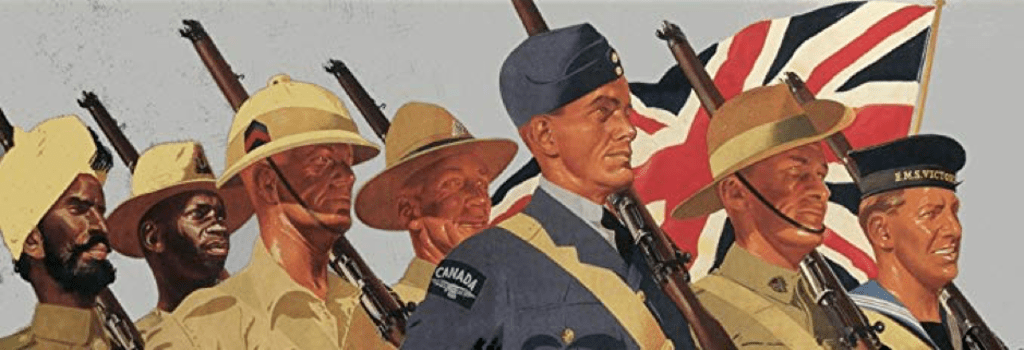
David Kenrick. Contemporary political discourse in Britain is saturated by sepia-tinged memorialisation of the Second World War. Parties across the country’s growing political divide invoke slogans and imagery redolent of the ‘blitz spirit’ or ‘going it alone’. Far from being a recent development, politicians have long sought to use these memories for contemporary purposes. In…
-

Mo Moulton’s ‘Mutual Admiration Society’: How Dorothy L. Sayers and her Oxford circle remade the world for women
Mo Moulton. In 1912, Dorothy L. Sayers and five friends founded a writing group at Somerville College, Oxford; they dubbed themselves the ‘Mutual Admiration Society.’ Barred, initially, from receiving their degrees despite taking classes and passing exams, the women battled for a truly democratic culture that acknowledged their equal humanity, pushing boundaries in reproductive rights,…
-

Not a bit “English”: Architecture, Emotions and Empire in a “Muslim World”
Sara Honarmand Ebrahimi. In 2011, I visited the Morsalin Hospital in Kerman (southern Iran) for the first time. I intended to work on the revitalisation plan of a historic hospital for my MA dissertation, and I was advised to focus on this hospital – I was told that the Morsalin hospital was the first contemporary…
-
Prosecuting Procurement in the Russian Empire
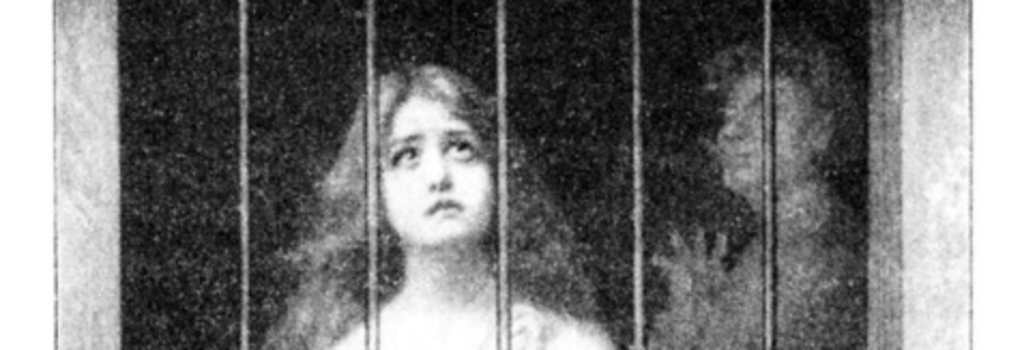
Siobhán Hearne. Panic over sex trafficking and the procurement of young women and girls for prostitution reached a crescendo in the early 1900s across Europe and the Americas. Government officials, doctors, jurists, and members of philanthropic organisations met at international congresses dedicated to tackling the problem and newspapers across the continents were filled with exposés of…
-

Running Tudor England’s Second City: The Accounts of the Chamberlains of Norwich, 1539-45
All information cited in the body of this text are taken from Rawcliffe, C, The Norwich Chamberlains Accounts 1539-40 to 1544-45. vol. 83, Norfolk Records Society, (Norwich, 2019). Please consult this volume if you wish to follow up and reference anything below. Carole Rawcliffe. Accounts are an important source of evidence for students of late…
-

Redefining the ‘Born’ Murderer: Lombrosian Legacies in Early Soviet Criminological Discourse.
Mark Vincent. The 1876 publication of Italian criminologist Cesare Lombroso’s L’uomo delinquent (‘Criminal Man’) caused quite a stir amongst professionals in late Imperial Russia, in addition to the field of Western social scientists. Whilst some elements of Lombrosian thought, such as inherited criminal impulses, a link between moral and physical deformity, and a determination to place the…
Got any book recommendations?
 History blog archive