Category: England
-
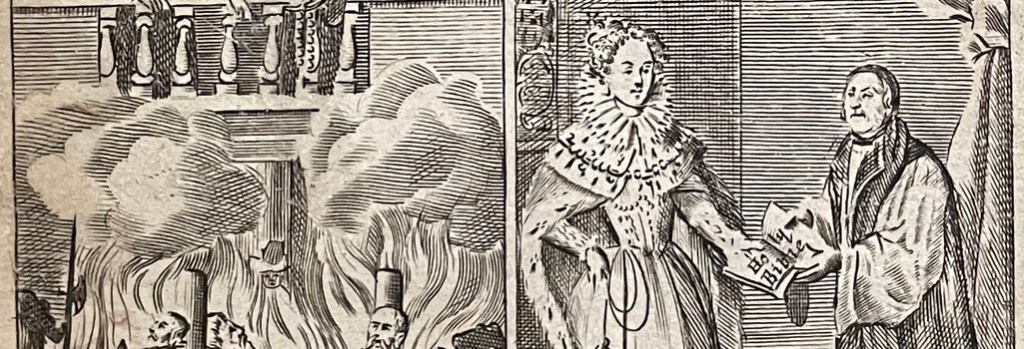
Celebrating the Accession Day of Elizabeth I of England, 1558 and Beyond
By Aidan Norrie On 17 November 1558, Elizabeth, daughter of Henry VIII and Anne Boleyn, succeeded to the throne of England and Ireland upon the death of her half-sister Mary I. She was England’s fourth monarch in eleven years (or fifth, if Jane Grey is counted), and it is not unreasonable to claim that her…
-
![‘”A celebrated correspondence between the charming Mrs C- formerly well-known in the fashionable World – & her Amiable Daughter”’: The Historical Importance of the letters of Hitty and Bess Canning.[1]](https://historyjournal.org.uk/wp-content/uploads/2021/11/rs-cover-image.jpg?w=1023)
‘”A celebrated correspondence between the charming Mrs C- formerly well-known in the fashionable World – & her Amiable Daughter”’: The Historical Importance of the letters of Hitty and Bess Canning.[1]
By Rachel Smith Whilst reading through the eighteenth-century Canning Family archive at the West Yorkshire Archive Service in Leeds, I came across a rather interesting letter from John Murray, a publisher, to a Mrs Butler. Dated 25th July 1912, he wrote that I gather from what Miss Routh and Mr. Duff told me that the…
-

‘Here terrible portents’: Famine as a Catalyst for the first Viking raids?
By Tenaya Jorgensen As an Environmental Historian, I am keenly interested in how humans have responded to climate pressures and weather extremes in the past, and what we can learn from these responses today. One aspect of my doctoral research compares periods of violence against temperature and precipitation during the early Viking Age, c. 790-920.…
-

The History of Emotions: A Four Volume Sourcebook
KATIE BARCLAY, with FRANÇOIS SOYER, is editor of Emotions in Europe, 1517-1914 (Routledge, 2020), a four volume sourcebook. Here she talks to History about the work. History: What was the inspiration behind this project? Katie: I’ve been teaching History of Emotions courses for several years now and had been developing a series of resources to support students…
-
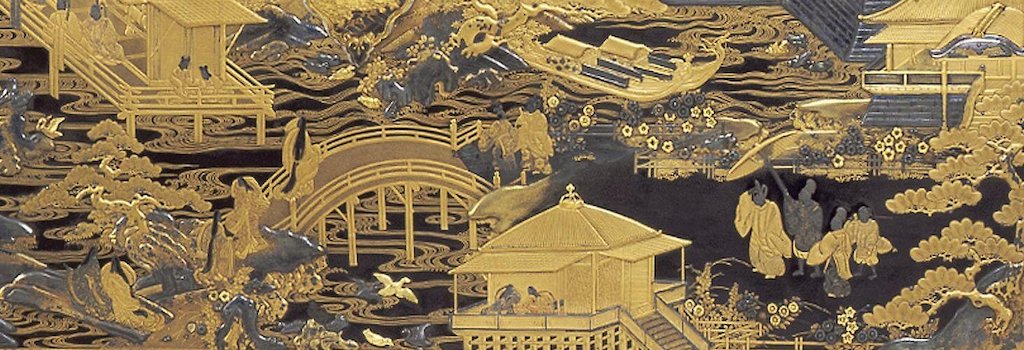
Lacquer as Art and Medicinal Material in Early Modern England
CHENG HE Look up the word ‘lacquer’ in an art dictionary, or on Google, and you usually find the word ‘varnish’; a sticky liquid applied to the surface of objects to form a shiny coating. The word can also refer to the objects coated with varnish themselves, which are sometimes decorated with additional materials like…
 History blog archive