Category: Medieval
-

Co-Rulership and Power in Medieval Europe
Fig. 1 Henry II and his children, Royal 14 B VI, Membrane 6, British By Gabby Storey For most scholars of royal studies, the concepts of corporate or composite monarchies, now fusing with ideas of co-rulership, are important – though not always essential – approaches to apply to the study of monarchy. However, for monarchical studies,…
-

Interview with Adam Simmons on ‘Nubia, Ethiopia, and the Crusading World, 1095-1402 (Routledge, 2022’)
By Gabby Storey and Adam D. Simmons How did you get into the topic of the book? I developed my initial interest in earlier African history during my MA at KCL. I’ve always been more interested in the topics which are often not covered, to understand why not and to see how much history we…
-

Finding Transgender Worlds in Late Medieval Iceland
By Basil Arnould Price Translations are the author’s own. On May 25, 2022, software engineer Helen Staniland streamed an interview with journalist Helen Joyce. During the interview, Joyce remarked: “…we have to try to limit the harm and that means reducing or keeping down the number of people who transition. That’s for two reasons –…
-

Desire between Men in the Byzantine Imperial Court: Some Evidence from Symeon the Logothete, Letter-Writer and Historiographer
By Mark Masterson All translations are the author’s own. The Byzantine Empire’s glorious Macedonian dynasty, beginning in 867 and ending in 1056 saw the empire experience both territorial expansion and an efflorescence in learning. The culture of men in the upper reaches of this society was a milieu that featured homoeroticism and same-sex desire. As…
-
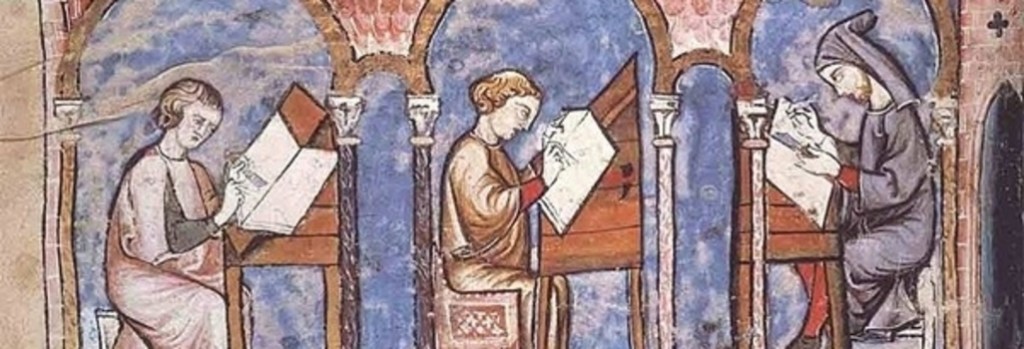
Narratology for Historical Research: Medieval Texts and Crusader Cannibals
By Katy Mortimer Historians use various methodologies to investigate the past. A particularly prominent feature of recent historiography, for example, is the exploration of social and cultural history, such as questions of gender, religion, power, and material culture. From the mid-twentieth century, moreover, the ‘linguistic turn’ and the development of narrative theory (narratology) led to…
-

Toppling Tyrants: Early Medieval Approaches to Regime Change
By Harry Mawdsley “[He] had very little sense. He conducted all his affairs without paying the slightest heed, till at length, employing a heavy hand against [his subjects], he was the cause of violent hatred and outrage among them” Such was the damning description of Childeric II’s reign in Francia by one early medieval chronicler.…
-
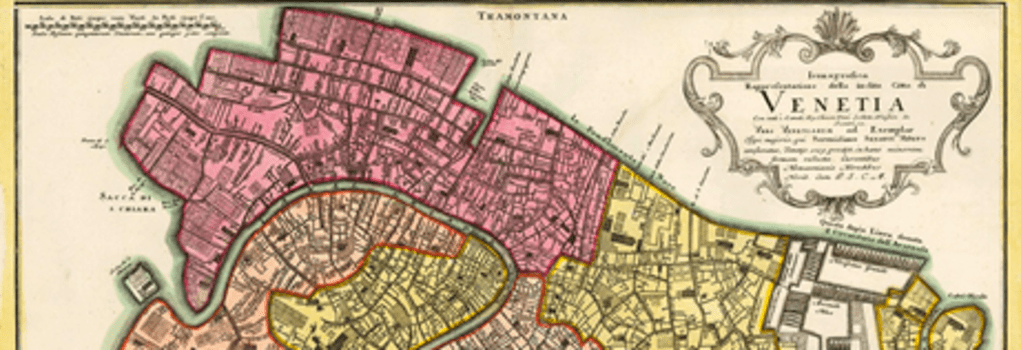
A Sexual Tour of Venice: Mapping a Sixteenth-Century Catalogue of Courtesans
By Hannah Johnston Sometime around 1565, a price-list of Venice’s cortigiane oneste, or “honest courtesans,” who served the city’s upper echelons, was published in Venice.[1] Titled Il catalogo di tutte le principali et più honorate cortigiane di Venezia (“The Catalogue of All the Principal and Most Honored Courtesans of Venice,” hereafter “the catalogue”), the catalogue…
-

‘Here terrible portents’: Famine as a Catalyst for the first Viking raids?
By Tenaya Jorgensen As an Environmental Historian, I am keenly interested in how humans have responded to climate pressures and weather extremes in the past, and what we can learn from these responses today. One aspect of my doctoral research compares periods of violence against temperature and precipitation during the early Viking Age, c. 790-920.…
-
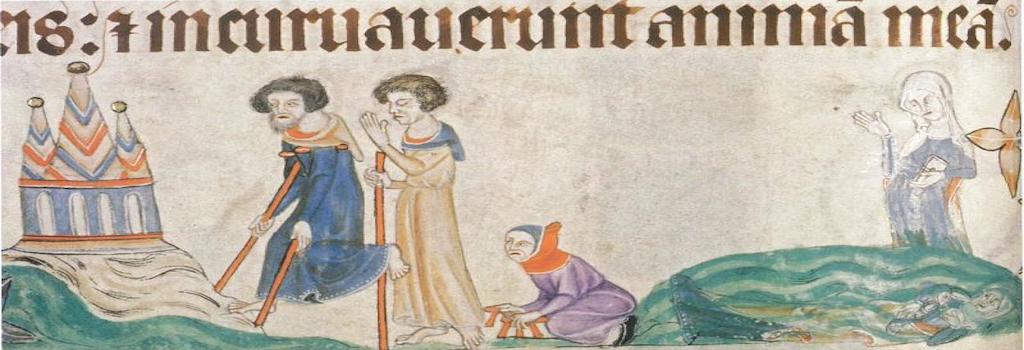
Saints, Beggars and Scapegoats
Why depictions of status and disability in the Early Middle Ages still matter JUTTA LAMMINAHO ‘A lame man crawling along on his hands led a blind man to the paupers’ hostel at St Gall, where both of them stayed the night, and were both healed at the tomb.’ – Walafrid Strabo, Life of St Otmar[1]…
-

Richard III, the Princes in the Tower, and Thomas More – answers to the mystery?
PROFESSOR TIM THORNTON The fascination evoked by Richard III and the mystery of the ‘princes in the Tower’ continues to grow. The discovery of Richard’s body under a carpark in 2012 and his reburial in Leicester Cathedral in 2015 drew international attention, and a stellar team led by Steve Coogan and Steven Frears will shortly…
 History blog archive