Category: Nation
-

The Francoist appropriation of the popular festival
Fig 1: Franco and members of the Seville government in a Holy Week procession in 1940 By Claudio Hernández Burgos and César Rina When it comes to understanding contemporary cultural processes and political dynamics, the study of festivals and popular rituals has traditionally occupied a secondary and anecdotal position in historiography. It has been interpreted as…
-

Portraits of Female Power in Argentina: Encarnación Ezcurra and Eva Perón
By Rachel Morgan The last three decades of the twentieth century have witnessed a boom in writings on Latin American women to the left of the political spectrum. When considering the topic of leftist Argentine women in power, the image of Eva Perón is inescapable: she was the impoverished and illegitimate child from Los Toldos…
-

Replacing Ireland’s Lost Records: Doing Public History with the Beyond 2022 Project
By Elizabeth Biggs One hundred years ago, in the spring and early summer of 1922, the Public Record Office of Ireland in the Four Courts complex in Dublin was occupied by anti-Treaty forces, with Rory O’Connor as one of their leaders. They were opposed to the Anglo-Irish Treaty of the previous year, which they felt…
-

Communications and Complaints: Revisiting Nineteenth-Century Germany
JEAN-MICHEL JOHNSTON We’ve all been there: a patchy Zoom connection, an interrupted online transaction, a YouTube video that just won’t load. We all recognise the everyday frustrations that come with the malfunctioning of the Internet, even as we celebrate ever faster broadband or cheaper mobile data allowances. Communications networks don’t always fulfil their promises, but…
-

Britain First: The official history of the United Kingdom according to the Home Office – a critical review
Frank Trentmann BRITAIN FIRST: The official history of the United Kingdom according to the Home Office – a critical review Following this summer’s open letter to the Home Office, this article by Frank Trentmann offers an analysis of the official history chapter in the ‘Life in the UK’ handbook that is required reading for migrants…
-
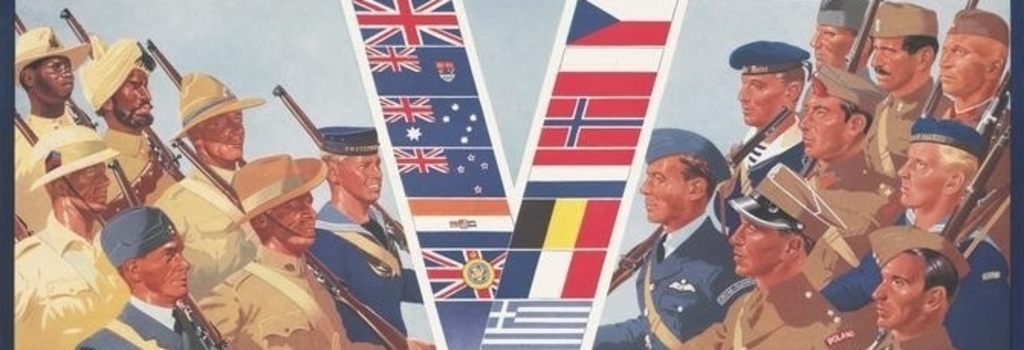
Edgerton & Empire: Nationalism, Imperialism and Decolonisation
Liam Liburd One of the indirect and unintended side-effects of the tragic murder of George Floyd by an officer of the Minneapolis Police Department in late May has been a renewed effort to confront Britain’s own history of racism, especially that in the form of colonialism. Activists have taken aim at the symbols of this…
-

How to run a country: Early modern style.
C. Annemieke Romein Let us assume you are governing an early modern ’country’: how should you provide order? How do you keep its inhabitants safe? And how might you organise governance and policy-making? Most researchers who deal with these questions tend to focus on principalities or kingdoms. With this blog post I would like to…
-

Gender, Nation and Decolonisation in Indian Cinema, 1947-1975
Lucy Inskip Cinema can help us to trace the process of decolonisation after 1947 in India. The direction of Indian cinema changed not only with independence but also in the decades that followed, while India’s post-independence modernity project wavered, especially during the cynicism and extra-parliamentary challenge of the 1970s. Whilst political commentary by cultural producers…
 History blog archive