Category: New Books
-

John Stearne’s Confirmation and discovery of witchcraft
New Book Interview: Scott Eaton, John Stearne’s Confirmation and Discovery of Witchcraft: Text, Context and Afterlife (Routledge, 2020). History: How did this project develop? Where did your interest in the subject originate? Scott: My interest in the history of witchcraft started during my BA at Ulster University when I took a module on European witchcraft and completed a…
-

Reading Russian Sources
George Gilbert Reading Russian Sources: creating a new edited collection When I was tasked with editing the collection Reading Russian Sources for Routledge, one of the first questions that came to mind – and the spirit I will be approaching this blog post with – is, in our current research environment that privileges beefy articles and monographs,…
-

Print Culture and the Formation of the Anarchist Movement in Spain, 1890-1915
…or, how I learned to stop worrying and love the book… James Michael Yeoman This is the second of a two-part discussion, which explores the creation and contents of my book, Print Culture and the Formation of the Anarchist Movement in Spain, 1890-1915, which was published last autumn. In part I, discussed my relationship with…
-

Print Culture and the Formation of the Anarchist Movement in Spain, 1890-1915
…or, how I learned to stop worrying and love the book… James Michael Yeoman This is the first of a two-part discussion which explores the creation and contents of my book, Print Culture and the Formation of the Anarchist Movement in Spain, which was published last autumn. While the second part of the discussion will…
-

Lucy Jane Santos’ ‘Half Lives: The Unlikely History of Radium’
Lucy Jane Santos In the late 19th century that Wilhelm Röntgen discovered a previously unknown form of powerful radiation that was invisible to the human eye. This type of ray, which no one (including Röntgen) fully understood at the time, was so mysterious that he simply named it ‘X’. In 1896, working from Röntgen’s findings,…
-
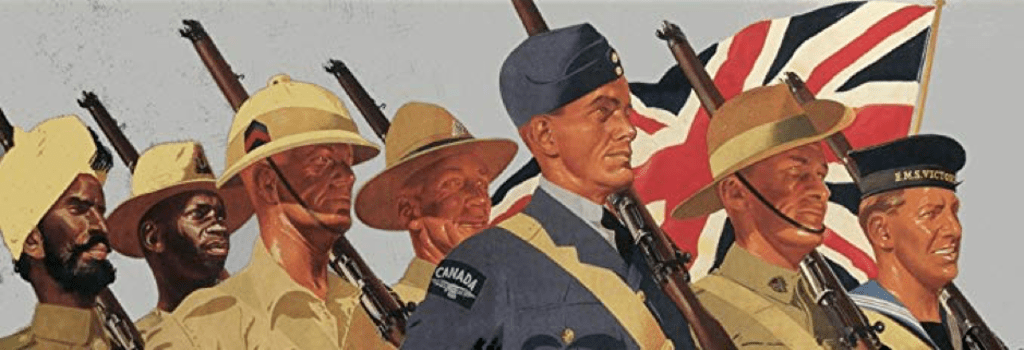
Do Mention the War: Discourses of Sacrifice and Obligation in White Rhodesian Society, 1964-1965
David Kenrick. Contemporary political discourse in Britain is saturated by sepia-tinged memorialisation of the Second World War. Parties across the country’s growing political divide invoke slogans and imagery redolent of the ‘blitz spirit’ or ‘going it alone’. Far from being a recent development, politicians have long sought to use these memories for contemporary purposes. In…
-

Mo Moulton’s ‘Mutual Admiration Society’: How Dorothy L. Sayers and her Oxford circle remade the world for women
Mo Moulton. In 1912, Dorothy L. Sayers and five friends founded a writing group at Somerville College, Oxford; they dubbed themselves the ‘Mutual Admiration Society.’ Barred, initially, from receiving their degrees despite taking classes and passing exams, the women battled for a truly democratic culture that acknowledged their equal humanity, pushing boundaries in reproductive rights,…
-

Running Tudor England’s Second City: The Accounts of the Chamberlains of Norwich, 1539-45
All information cited in the body of this text are taken from Rawcliffe, C, The Norwich Chamberlains Accounts 1539-40 to 1544-45. vol. 83, Norfolk Records Society, (Norwich, 2019). Please consult this volume if you wish to follow up and reference anything below. Carole Rawcliffe. Accounts are an important source of evidence for students of late…
-

Redefining the ‘Born’ Murderer: Lombrosian Legacies in Early Soviet Criminological Discourse.
Mark Vincent. The 1876 publication of Italian criminologist Cesare Lombroso’s L’uomo delinquent (‘Criminal Man’) caused quite a stir amongst professionals in late Imperial Russia, in addition to the field of Western social scientists. Whilst some elements of Lombrosian thought, such as inherited criminal impulses, a link between moral and physical deformity, and a determination to place the…
 History blog archive