History Journal blog archive
The online offering of the official journal of the Historical Association
This website constitutes the archive of the History journal blog up to May 2023. For further information, please consult the new blog as well as the journal website.
-

Britain First: The official history of the United Kingdom according to the Home Office – a critical review
Frank Trentmann BRITAIN FIRST: The official history of the United Kingdom according to the Home Office – a critical review Following this summer’s open letter to the Home Office, this article by Frank Trentmann offers an analysis of the official history chapter in the ‘Life in the UK’ handbook that is required reading for migrants…
-

Print Culture and the Formation of the Anarchist Movement in Spain, 1890-1915
…or, how I learned to stop worrying and love the book… James Michael Yeoman This is the second of a two-part discussion, which explores the creation and contents of my book, Print Culture and the Formation of the Anarchist Movement in Spain, 1890-1915, which was published last autumn. In part I, discussed my relationship with…
-

Print Culture and the Formation of the Anarchist Movement in Spain, 1890-1915
…or, how I learned to stop worrying and love the book… James Michael Yeoman This is the first of a two-part discussion which explores the creation and contents of my book, Print Culture and the Formation of the Anarchist Movement in Spain, which was published last autumn. While the second part of the discussion will…
-

Lucy Jane Santos’ ‘Half Lives: The Unlikely History of Radium’
Lucy Jane Santos In the late 19th century that Wilhelm Röntgen discovered a previously unknown form of powerful radiation that was invisible to the human eye. This type of ray, which no one (including Röntgen) fully understood at the time, was so mysterious that he simply named it ‘X’. In 1896, working from Röntgen’s findings,…
-
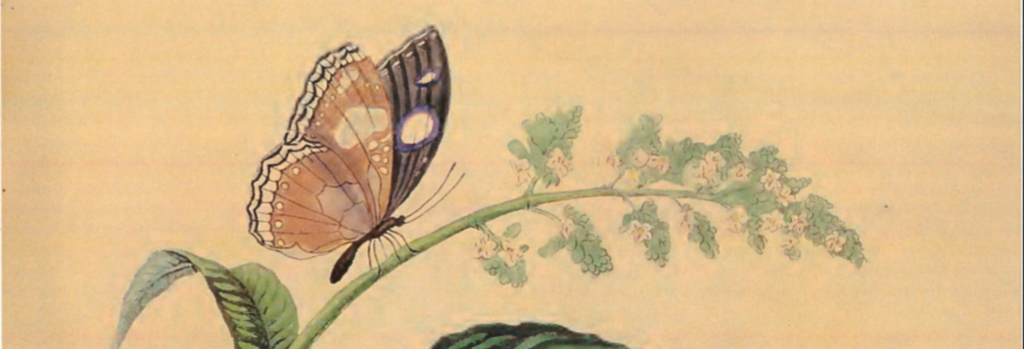
James Forbes’ Mango and the Art of British Indian Empire
Apurba Chatterjee In 1765, James Forbes, a mere Scottish lad of less than sixteen years of age, set sail to India following his appointment as a Writer for the English East India Company (EIC) in Bombay. Forbes was to stay in India for eighteen years, and he gradually rose to prominence as the Collector of…
-

Historians Call for a Review of Home Office Citizenship and Settlement Test
21 July 2020 Historians Call for a Review of Home Office Citizenship and Settlement Test We are historians of Britain and the British Empire and writing in protest at the on-going misrepresentation of slavery and Empire in the “Life in the UK Test”, which is a requirement for applicants for citizenship or settlement (“indefinite leave…
-

How to Run an Empire: Early Modern Style
L.H. Roper Dr C. Annemieke Romein recently offered a very helpful discussion here of how the habitual misunderstanding and misuse of nineteenth-century characterisations of ‘-isms’ and ‘the state’ continue to obscure our understanding of the nature and history of European government prior to 1789. With Dr Romein’s permission and assistance, this post will extend her…
-
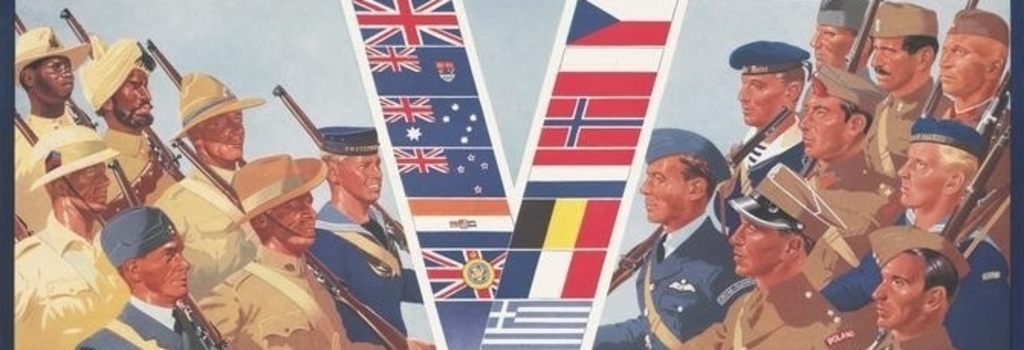
Edgerton & Empire: Nationalism, Imperialism and Decolonisation
Liam Liburd One of the indirect and unintended side-effects of the tragic murder of George Floyd by an officer of the Minneapolis Police Department in late May has been a renewed effort to confront Britain’s own history of racism, especially that in the form of colonialism. Activists have taken aim at the symbols of this…
-

Healing the Whig schism: 300 years on
Robin Eagles Fractures within political parties are nothing new. In 1717, the apparent unity that the Hanoverian accession had instilled in the Whigs came to an end amid infighting over direction of policy and disagreement over who was to hold what post in the new administration.[1] It was a fissure that was to last almost…
-

The jokes always saved us: humour in the time of Stalin
Jonathan Waterlow This piece was originally published at Aeon under a creative commons licence, and has been reproduced here with the agreement and encouragement of the author. Stalinism. The word conjures dozens of associations, and ‘funny’ isn’t usually one of them. The ‘S-word’ is now synonymous with brutal and all-encompassing state control that left no…
Got any book recommendations?
 History blog archive