Category: Gender
-

Material Culture and Identities: The Case of Eighteenth Century Toby Jugs
KERRY LOVE A main principle of material culture theory (the study of objects and their relationships to people) is that they can reflect or shape the people who lived alongside them in any given time. I have always enjoyed studying objects more than any other kind of source because the process gave me a direct…
-

A Global History of Sex and Gender
DR HANNAH TELLING What is gender history and why does it matter? For me, it is a discipline that provides a fascinating insight into the often-overlooked aspects of history. I was first introduced to gender history as an undergraduate and the University of Edinburgh, when I enrolled on a course called ‘Gender and Sexuality in…
-

Lucy Jane Santos’ ‘Half Lives: The Unlikely History of Radium’
Lucy Jane Santos In the late 19th century that Wilhelm Röntgen discovered a previously unknown form of powerful radiation that was invisible to the human eye. This type of ray, which no one (including Röntgen) fully understood at the time, was so mysterious that he simply named it ‘X’. In 1896, working from Röntgen’s findings,…
-

Worrying about the Field of the History of Emotions in Ireland – A report
Sara Honarmand Ebrahimi Back in November, when the world was still in a relatively ‘normal’ state, I asked Dr Hannah Parker about the possibly of writing a report for the new History website concerning a series of events I was organising under the title, “Worrying about the Field of the History of Emotions in Ireland”.…
-

Gender, Nation and Decolonisation in Indian Cinema, 1947-1975
Lucy Inskip Cinema can help us to trace the process of decolonisation after 1947 in India. The direction of Indian cinema changed not only with independence but also in the decades that followed, while India’s post-independence modernity project wavered, especially during the cynicism and extra-parliamentary challenge of the 1970s. Whilst political commentary by cultural producers…
-

Using Scrapbooks as Historical Sources
Cherish Watton. Think of any topic, and someone, somewhere, has probably made a scrapbook on it. People scrapbooked on things which were important to them; family, friendships, professional activity, popular culture, political, and associational activity. Scrapbooks didn’t just document family life. Politicians and diplomats turned to scrapbooks to record their careers and were often acknowledged…
-

Mo Moulton’s ‘Mutual Admiration Society’: How Dorothy L. Sayers and her Oxford circle remade the world for women
Mo Moulton. In 1912, Dorothy L. Sayers and five friends founded a writing group at Somerville College, Oxford; they dubbed themselves the ‘Mutual Admiration Society.’ Barred, initially, from receiving their degrees despite taking classes and passing exams, the women battled for a truly democratic culture that acknowledged their equal humanity, pushing boundaries in reproductive rights,…
-
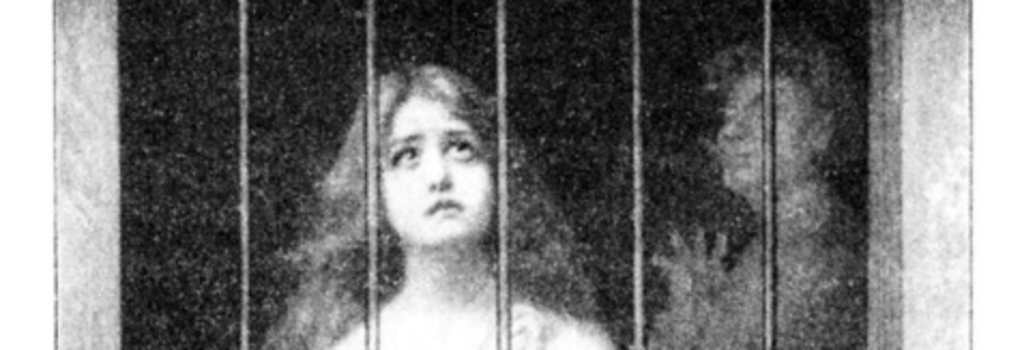
Prosecuting Procurement in the Russian Empire
Siobhán Hearne. Panic over sex trafficking and the procurement of young women and girls for prostitution reached a crescendo in the early 1900s across Europe and the Americas. Government officials, doctors, jurists, and members of philanthropic organisations met at international congresses dedicated to tackling the problem and newspapers across the continents were filled with exposés of…
 History blog archive