Category: Methodologies
-

The Francoist appropriation of the popular festival
Fig 1: Franco and members of the Seville government in a Holy Week procession in 1940 By Claudio Hernández Burgos and César Rina When it comes to understanding contemporary cultural processes and political dynamics, the study of festivals and popular rituals has traditionally occupied a secondary and anecdotal position in historiography. It has been interpreted as…
-

Replacing Ireland’s Lost Records: Doing Public History with the Beyond 2022 Project
By Elizabeth Biggs One hundred years ago, in the spring and early summer of 1922, the Public Record Office of Ireland in the Four Courts complex in Dublin was occupied by anti-Treaty forces, with Rory O’Connor as one of their leaders. They were opposed to the Anglo-Irish Treaty of the previous year, which they felt…
-

A Royal Bedroom: Gender, Class and Material Culture
By Esther Griffin van Orsouw For my PhD research at the University of Warsaw, I investigate the consumption of art by the Sobieski family and their contemporaries in the late 17th and early 18th century in relation to space. I consider what type of objects the royals surrounded themselves with, whether they favoured any objects…
-
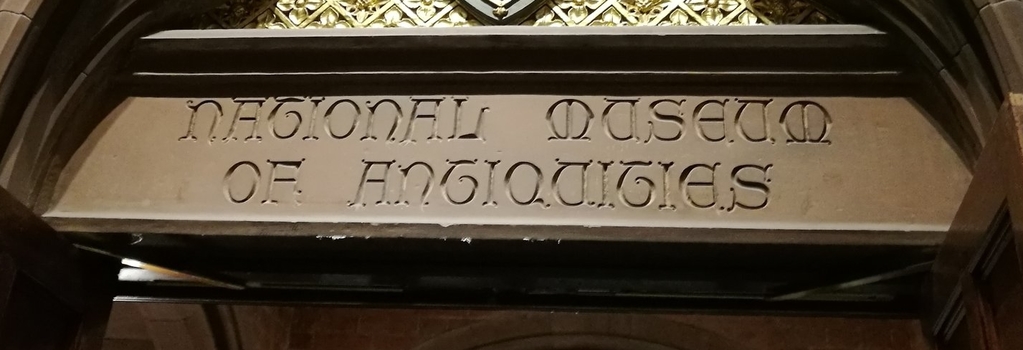
Women collectors, Lady Associates and the Society of Antiquaries of Scotland
By Julie Holder When I tell people that I research the nineteenth-century history of the Society of Antiquaries of Scotland, a very specific idea of an ‘antiquary’ comes to mind: white, male, and middle or upper class. And to a great extent this view is correct. However, that does not mean that women were not…
-
![‘”A celebrated correspondence between the charming Mrs C- formerly well-known in the fashionable World – & her Amiable Daughter”’: The Historical Importance of the letters of Hitty and Bess Canning.[1]](https://historyjournal.org.uk/wp-content/uploads/2021/11/rs-cover-image.jpg?w=1023)
‘”A celebrated correspondence between the charming Mrs C- formerly well-known in the fashionable World – & her Amiable Daughter”’: The Historical Importance of the letters of Hitty and Bess Canning.[1]
By Rachel Smith Whilst reading through the eighteenth-century Canning Family archive at the West Yorkshire Archive Service in Leeds, I came across a rather interesting letter from John Murray, a publisher, to a Mrs Butler. Dated 25th July 1912, he wrote that I gather from what Miss Routh and Mr. Duff told me that the…
-

Why is the HIstory of Emotions So Important?
ASHLEIGH WILSON The History of Emotions has become a vital field of historical research within contemporary academic discussions. Able to provide insight into the emotional history of a particular event, society and culture, this thematic approach has allowed for a nuanced understanding of the past. As a current undergraduate student, I have become deeply fascinated…
-

The History of Emotions: A Four Volume Sourcebook
KATIE BARCLAY, with FRANÇOIS SOYER, is editor of Emotions in Europe, 1517-1914 (Routledge, 2020), a four volume sourcebook. Here she talks to History about the work. History: What was the inspiration behind this project? Katie: I’ve been teaching History of Emotions courses for several years now and had been developing a series of resources to support students…
-
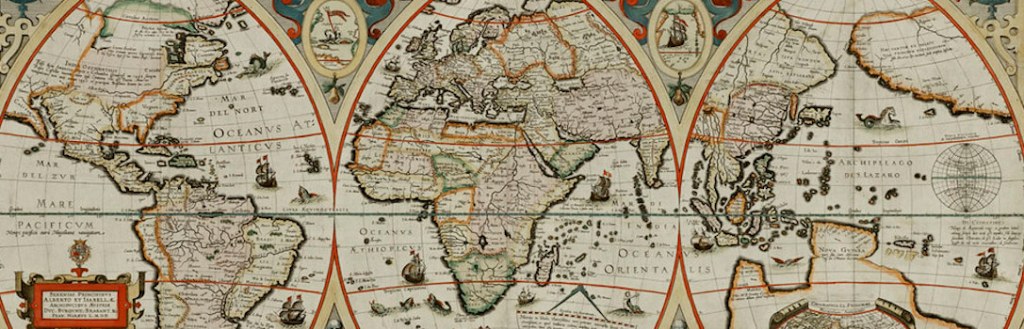
Will Africa be included in a global history of Covid-19?
ANNA ADIMA Over a year into the Covid-19 pandemic, one would be hard-pressed to deny that future history books will record this as a global milestone in the 21st century. Every individual around the world has in some way been affected by the virus; however, mainstream – Western – media remains guilty of underreporting the pandemic…
-
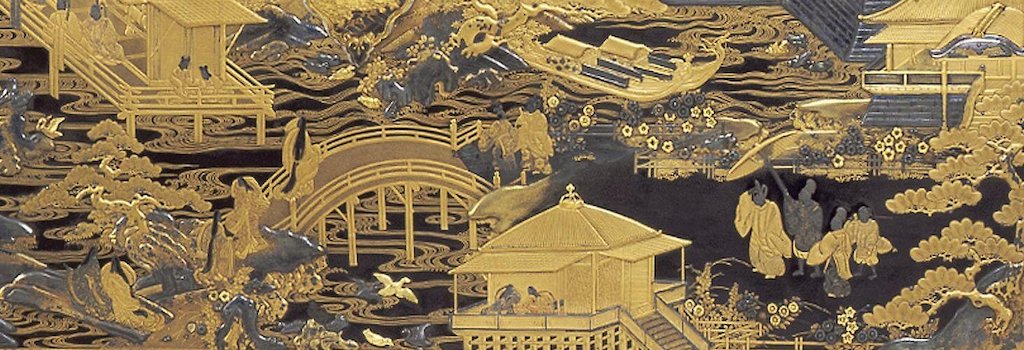
Lacquer as Art and Medicinal Material in Early Modern England
CHENG HE Look up the word ‘lacquer’ in an art dictionary, or on Google, and you usually find the word ‘varnish’; a sticky liquid applied to the surface of objects to form a shiny coating. The word can also refer to the objects coated with varnish themselves, which are sometimes decorated with additional materials like…
-
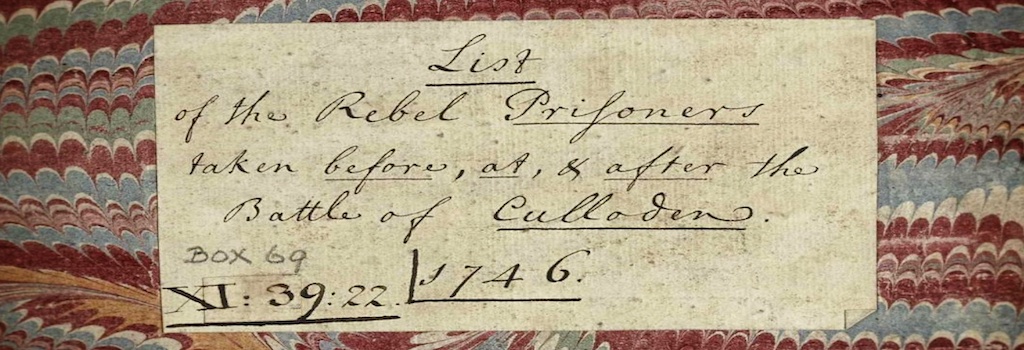
Analysing Jacobite Prisoner Lists with JDB45
Analogous Analysis Paralysis: The Stultifying Weltschmerz of Jacobite Prisoner Lists DR DARREN SCOTT LAYNE Now nearly three centuries on from Jacobitism’s imminent threat to the British post-revolution state, the movement’s historical record is still a living entity with plenty of room for growth. To wit, the demographic characteristics of both domestic and international participation in…
 History blog archive